Industrial waste refers to waste generated from facilities that discharge waste, including factories,
establishments producing designated wastes, or businesses that discharge more than 300 kg per day or over 5 tons
due to construction or operations. This includes waste generated in such establishments.
Refers to waste generated from facilities operating under the Air Quality Preservation Act,
Water Quality Preservation Act, or Noise & Vibration Regulation Act, as well as other establishments specified by presidential decree.
Among industrial wastes, hazardous substances such as waste oil, waste acid,
or infectious materials that may pollute the environment or harm human health, as defined by presidential decree.
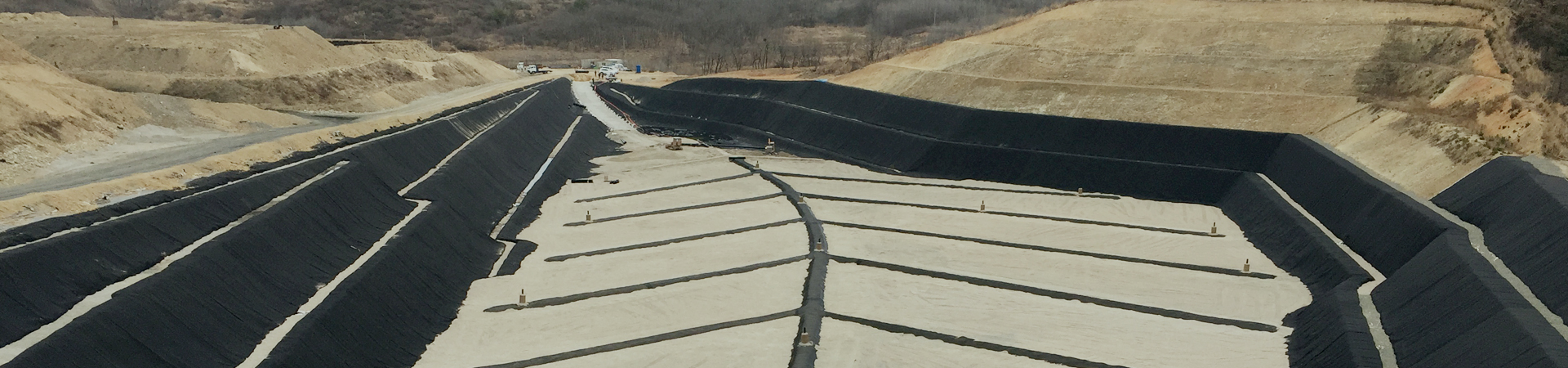
Waste is landfilled in an oxygen-free environment, covered layer by layer with soil or other materials
in a sandwich-style cover system.
This structure maintains an anaerobic environment, allowing safe decomposition
of waste while effectively controlling leachate and gas generation.
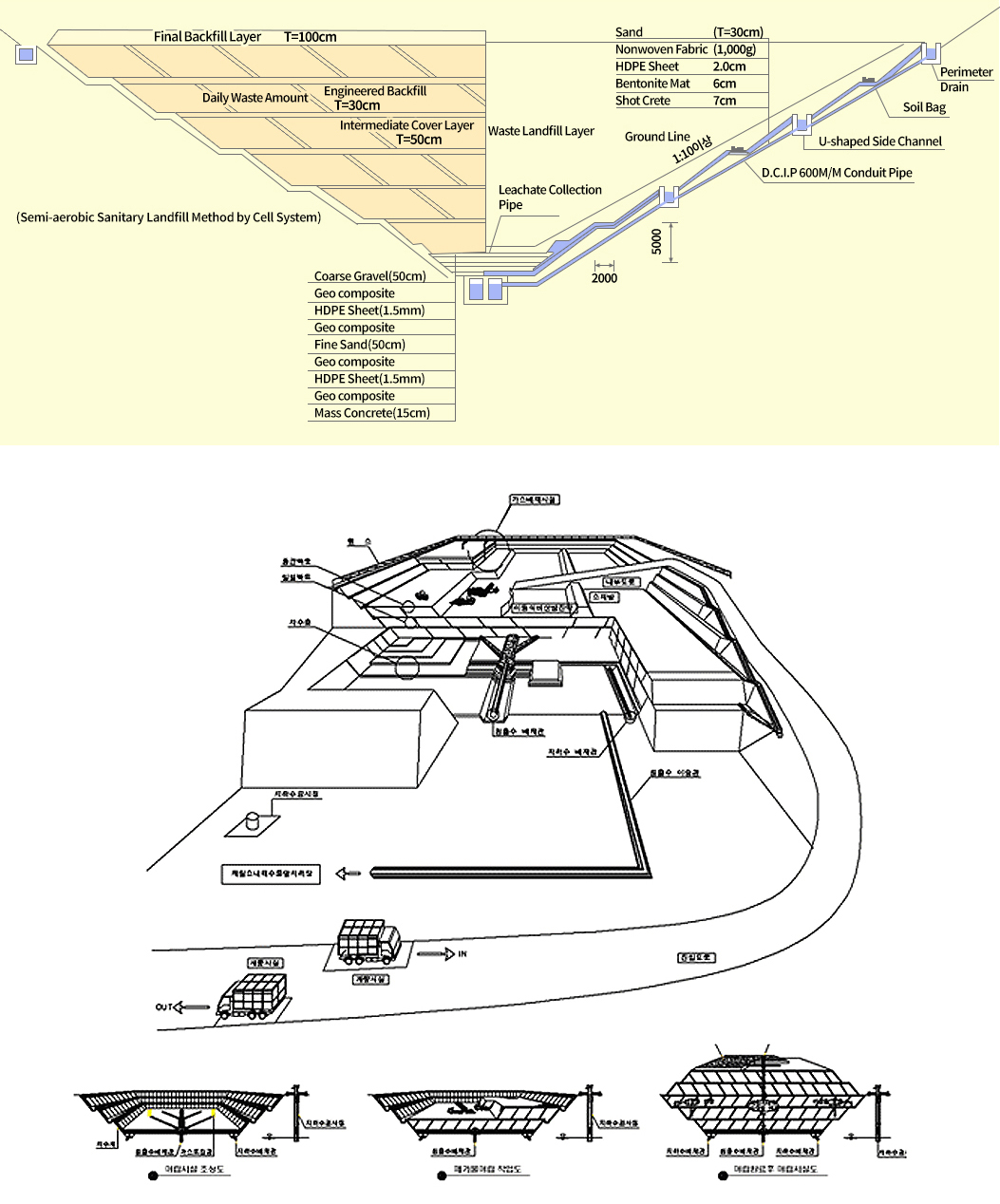
Based on the anaerobic sanitary landfill method, collection pipes are installed at the bottom
to prevent leachate leakage and control moisture effectively.
This design ensures waste remains in anaerobic
conditions while maintaining lower moisture content at the base, providing a more stable landfill environment.
The outlet of the leachate collection pipe is designed to connect with the air, and gravel or coarse stones are
filled around the ventilation pipes within the landfill layers, allowing oxygen from the air to enter.
This activates aerobic microorganisms to accelerate waste decomposition and allows smooth leachate discharge.
Suitable for flat-type landfills, combining stability and treatment efficiency.
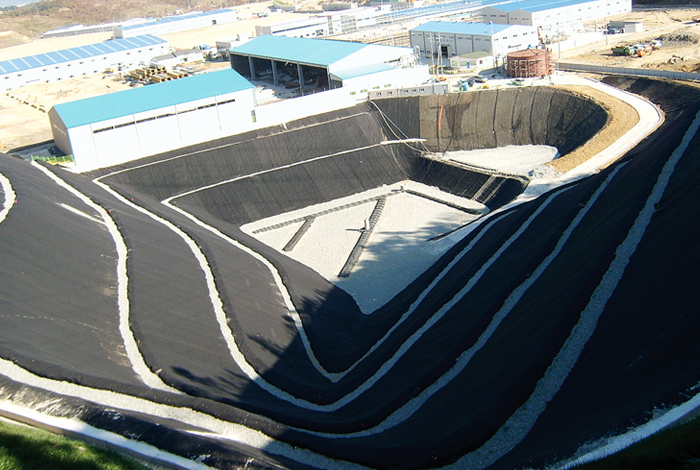
An enhancement of the semi-aerobic landfill structure, adding leachate drainage and
ventilation features at each slope level.
This ensures rapid leachate removal, expanded aerobic zones,
and reduces concerns about blocked drainage pipes. It is suitable for hilly or valley terrains, allowing terrain-conscious stable design.
Based on the semi-aerobic landfill structure, air injection pipes are added to forcibly inject air into the waste layers.
This maintains an aerobic (oxygen-rich) environment, promoting faster microbial decomposition of waste.
It is an effective method for improving decomposition speed, leachate control, and odor reduction.

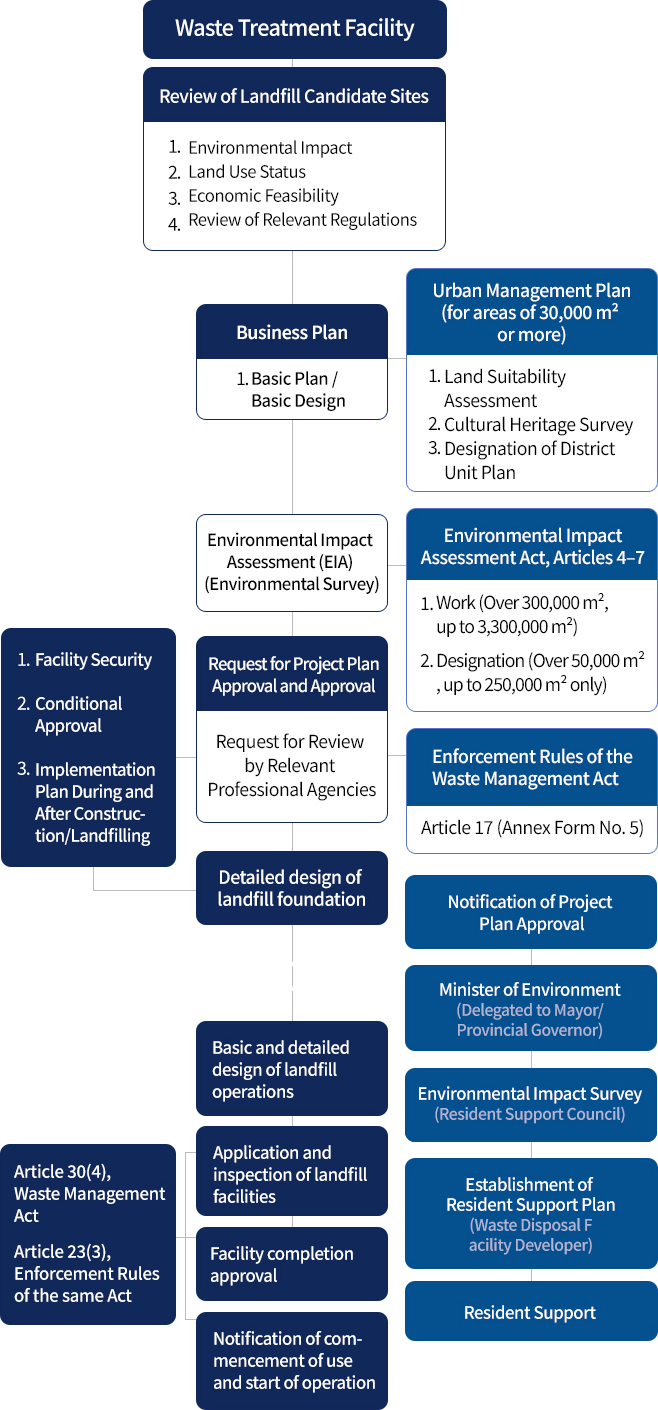
"Installation Inspection" refers to an inspection conducted on a waste treatment facility
by the installer, according to the standards and methods under Article 3, to determine whether the facility’s
type and functions comply with installation standards, as prescribed in Article 30-2, Paragraph 1 of the Act.
| Category | Inspection Items | |
|---|---|---|
| Installation Inspection | Common Items |
|
| Sealed Landfill Facility |
|
|
| Managed Landfill Facility |
|
|
a. Environmental Management Corporation
b. Korea Institute of Construction Technology,
established under the Act on Establishment, Operation, and Promotion of Government-Funded Research Institutes
c. Korea Rural Community Corporation, under the Agricultural Land Management Fund Act
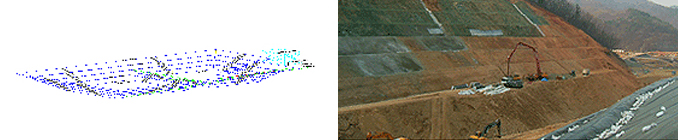
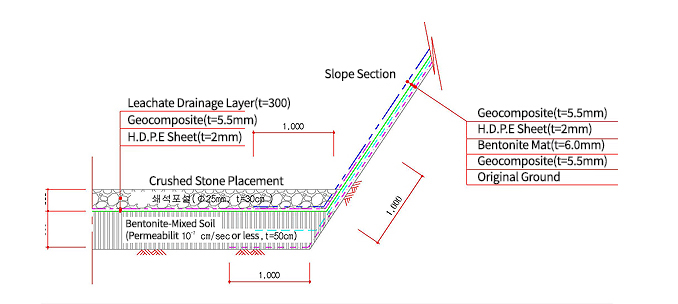

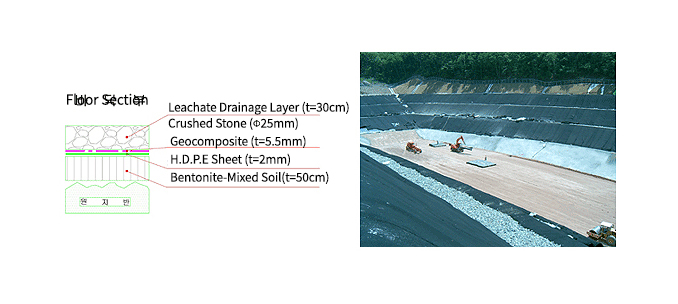
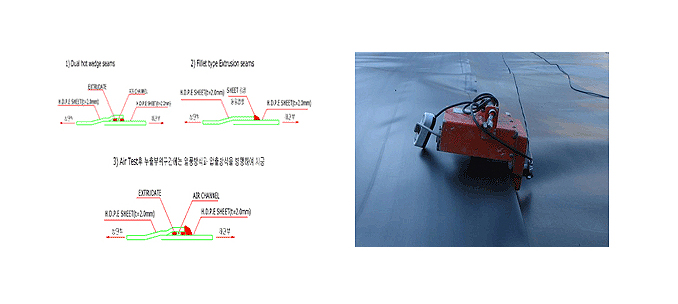


After daily landfill operations are completed, a layer of cover soil is placed over the waste.
The daily cover should be 15cm thick to prevent waste from being exposed.
The main purposes of daily cover include preventing pest habitation,
controlling waste scattering, fire prevention, odor suppression, and preventing rainwater infiltration.
Applied when the landfill layer is exposed for more than 7 days or when the landfill height reaches 3m,
it is necessary to prevent gas leakage and provide access for waste transport vehicles.
The cover thickness should be at least 30cm, compacted properly, and periodic maintenance is required to prevent water
accumulation or erosion due to rainfall.
Various types of soil can be used for cover, selected according to its purpose.
For daily cover, which primarily serves to cover the waste surface, there is no restriction on soil type.
Soil excavated within the landfill or transported from nearby areas is economical.
For slope cover, clay with proper cohesion is suitable to ensure slope stability and to withstand erosion from rainfall.
1. “Regular inspection” refers to inspections conducted periodically according to Article 30-2(2) of the law
to ensure that the waste disposal facility is maintained and managed according to installation and management standards.
2. Inspection period: The first regular inspection is 1 year after commencement of use,
and subsequent inspections are conducted every 3 years from the last inspection.
3. Items to be inspected
| Category | Inspection Items | |
|---|---|---|
| Installation Inspection | Landfill with Barrier |
|
| Controlled Landfill |
|
|
Applied after landfill completion, it ensures waste stability and allows for planting trees or grass.
Thickness and layers including gas venting, barrier, drainage, and vegetation should follow regulations, maintaining a slope to prevent soil erosion.
Must be prepared according to the methods provided in the [Partial Amendment 2007.2.14, Ministry of Environment Ordinance No. 228].

Post-closure management is required for up to 20 years from the date of decommissioning or closure
notification according to Article 50(1).
However, if the landfill inspection agency determines that
management is unnecessary after evaluating leachate properties, groundwater and surface water quality,
soil contamination, gas emissions, and structural stability, the period may end upon official notification.
Dedicated personnel must be assigned to maintain and
manage all facilities requiring post-closure management, such as leachate treatment systems.
- Operation and maintenance of leachate treatment facilities
- Gas treatment costs from the landfill
- Maintenance and water quality testing of groundwater wells
- Costs to prevent embankment erosion
- Environmental monitoring around the landfill
- Costs for reprocessing or restoring buried waste
During post-closure management, land use above the landfill is restricted.
A land-use plan must be prepared according to Article 54 of the Waste Management Act, referring to related laws such as the Urban Parks and Green Spaces Act.
| Relevant Law | Legal Basis |
|---|---|
| Waste Management Act [Partial Amendment 2007.5.25, Law No. 8486] |
Article 54 (Land Use Restrictions After Decommissioning or Closure): The Minister of Environment may limit the use of land with decommissioned landfill facilities to parks, tree planting, grassland, or sports facilities for a specified period if leachate leakage, embankment failure, or other issues pose significant risk to public health, property, or the surrounding environment. |



GOLDENPOW Co., Ltd. CEO: Jinseop Shim Head Office: 412, Samseong-ro, Gangnam-gu, Seoul Business Registration No.: 312-81-19153
Tel: +82-2-554-4655 Fax: +82-2-554-5364, +82-2-566-0267 Email: goldenpow@goldenpow.com
Cheonan Plant: 15, Garyong-gil, Seonghwan-eup, Seobuk-gu, Cheonan-si, Chungnam Tel: +82-41-581-6522 Fax: +82-41-581-0424
Iksan Plant: 38, Samgi Nonggongdanji-gil, Samgi-myeon, Iksan-si, Jeonbuk Tel: +82-63-858-0572 Fax: +82-63-858-0433
